Glass Firewall in Times Square
For 2026, we met at Microsoft’s Times Square office in New York City. The room held a real mix of experience: people trying security for the first time, working researchers, engineers, and women considering where cybersecurity might fit into their careers.
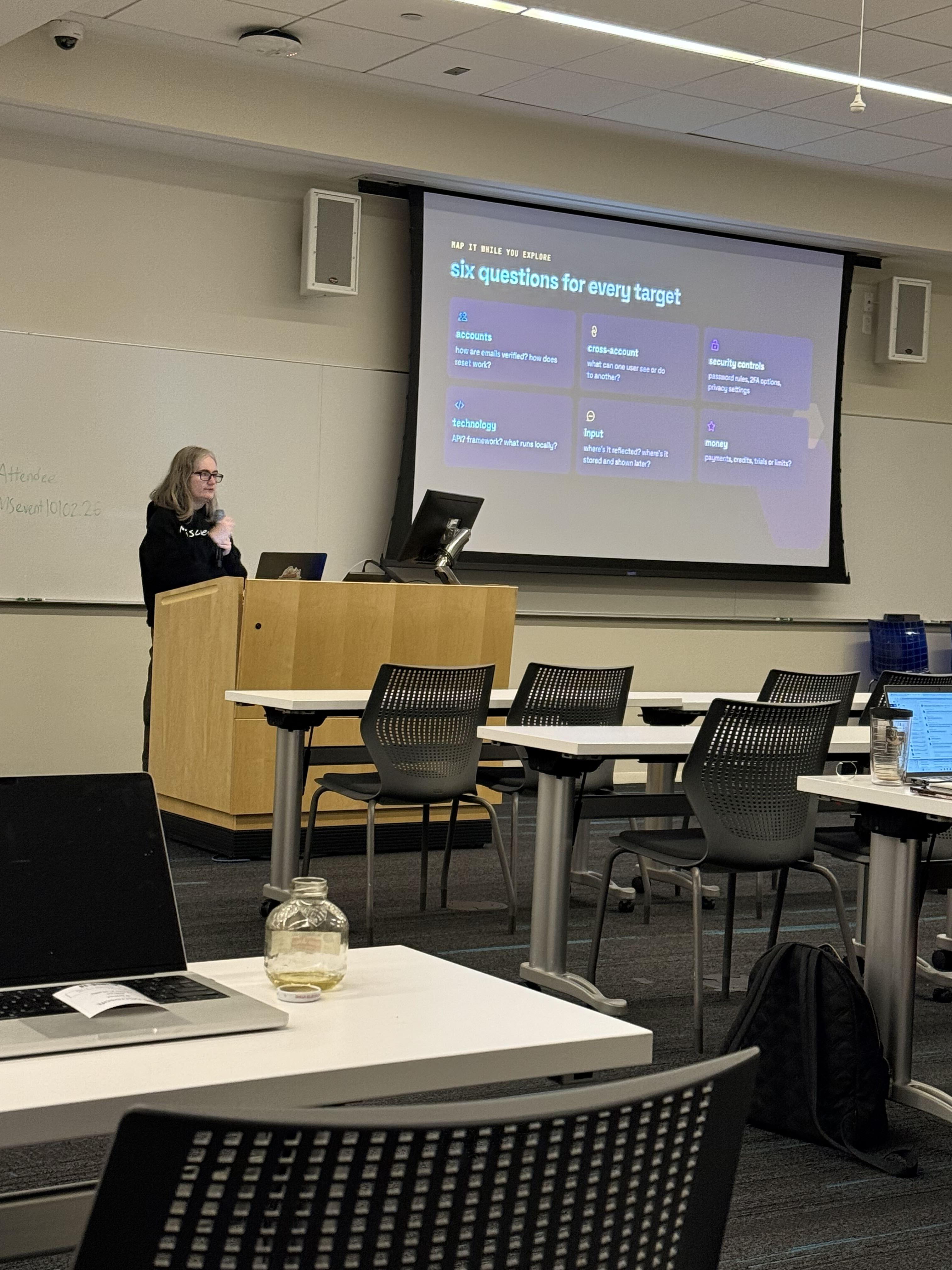
We started with web vulnerabilities, then tackled a problem every new bug hunter recognizes: you choose a program, open Burp, watch requests pile up, and have no idea what to look at first. The session on finding a first bug showed how to narrow a large application into something you can actually test without getting lost in the noise.
Tools, reports, and hardware on the table
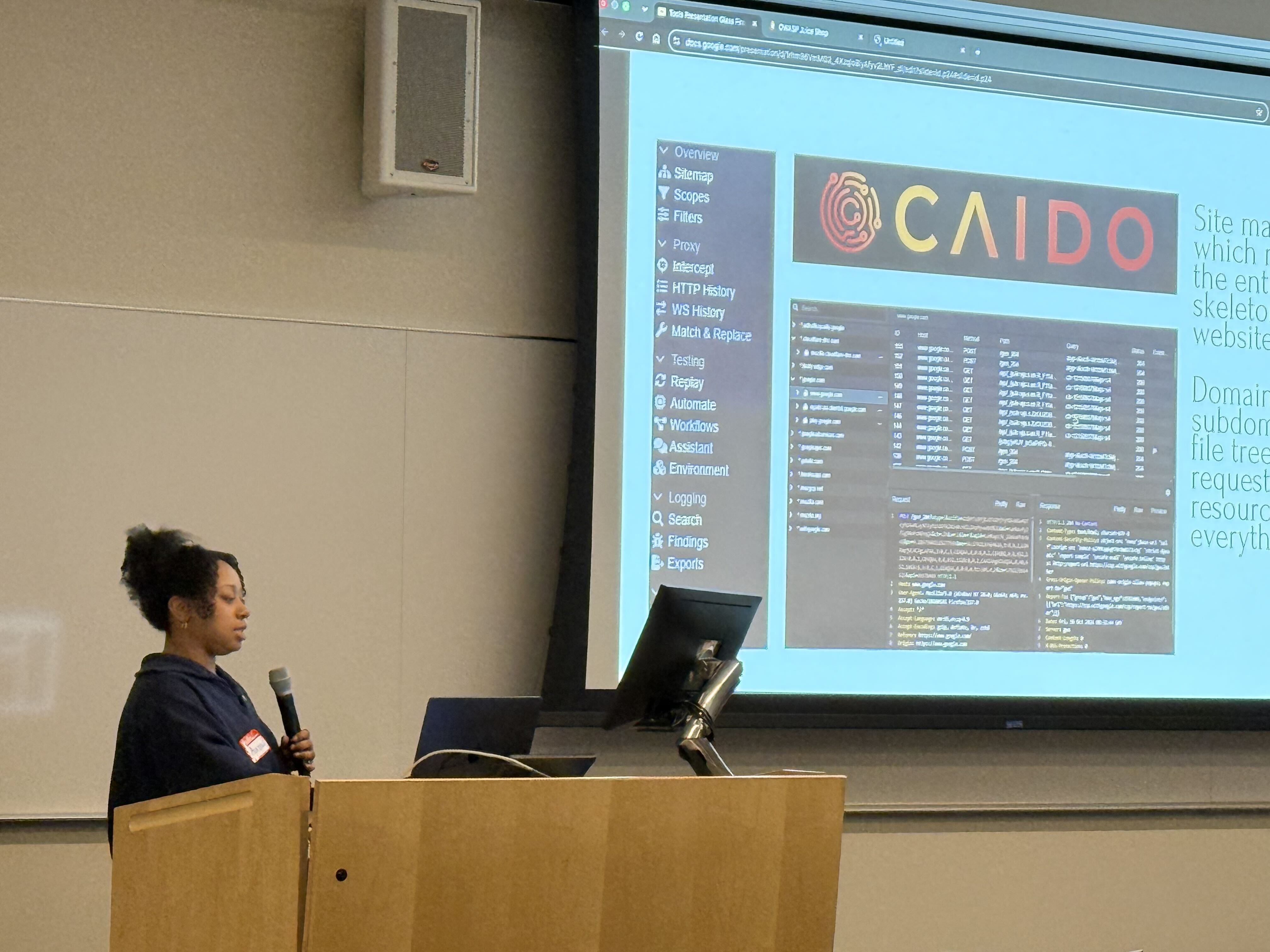
Aurielle Catron opened up the hacker toolbox with browser developer tools, Nmap, and ideas attendees could continue practicing at home. Other sessions covered report writing and AI-assisted hacking, including the important difference between using AI to move faster and trusting it without checking its work.
The longest workshop of the day moved away from the browser. Catherine Cassell led two hours of hardware hacking, with physical devices to probe and modify. It was messy in the useful way hands-on work often is. Participants had to look closely, troubleshoot, and figure things out together.
The careers behind the technical work
The day ended with a Women’s Career Leadership Panel featuring voices from HackerOne, GitLab, Bug Bounty Girls Club, and other parts of the security community. The panel made room for the questions that sit behind the technical sessions: how people found their way into security, what helped them stay, and what they wish they had known sooner.
By the end of the day, attendees had seen several sides of the work, from a first pass through web testing to the care required to write a useful report. Just as important, they had people in the room to ask when something did not make sense.
Official information: Visit the 2026 HackerOne Community event page for the archived schedule and venue details.
Program highlights
Web vulnerability foundations
A plain-language introduction to common web vulnerabilities and the way researchers approach them.
Finding a first bug
How to turn an overwhelming stream of requests into a smaller, testable piece of an application.
The hacker toolbox
Aurielle Catron worked through browser developer tools, Nmap, and ways to keep practicing at home.
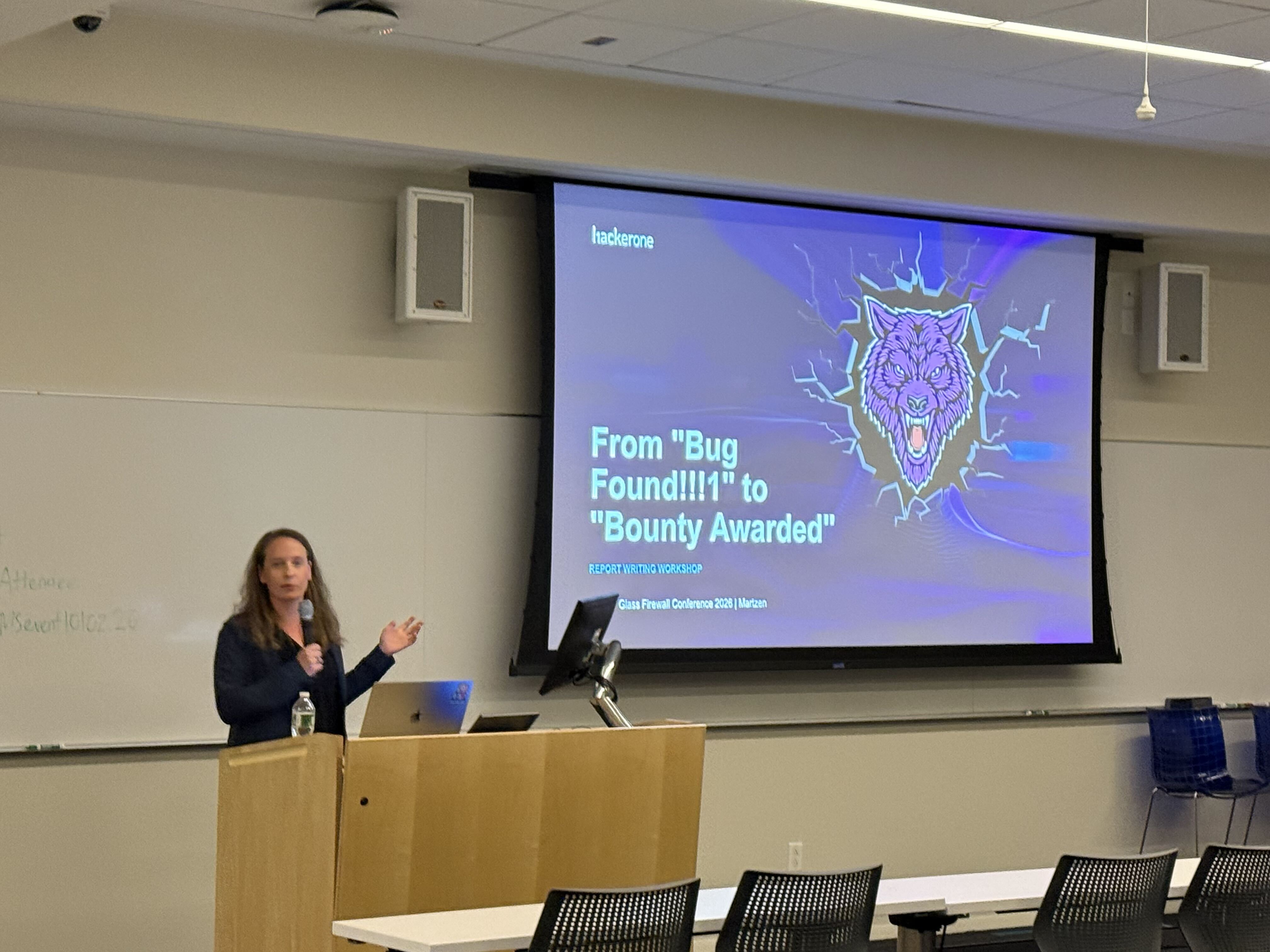
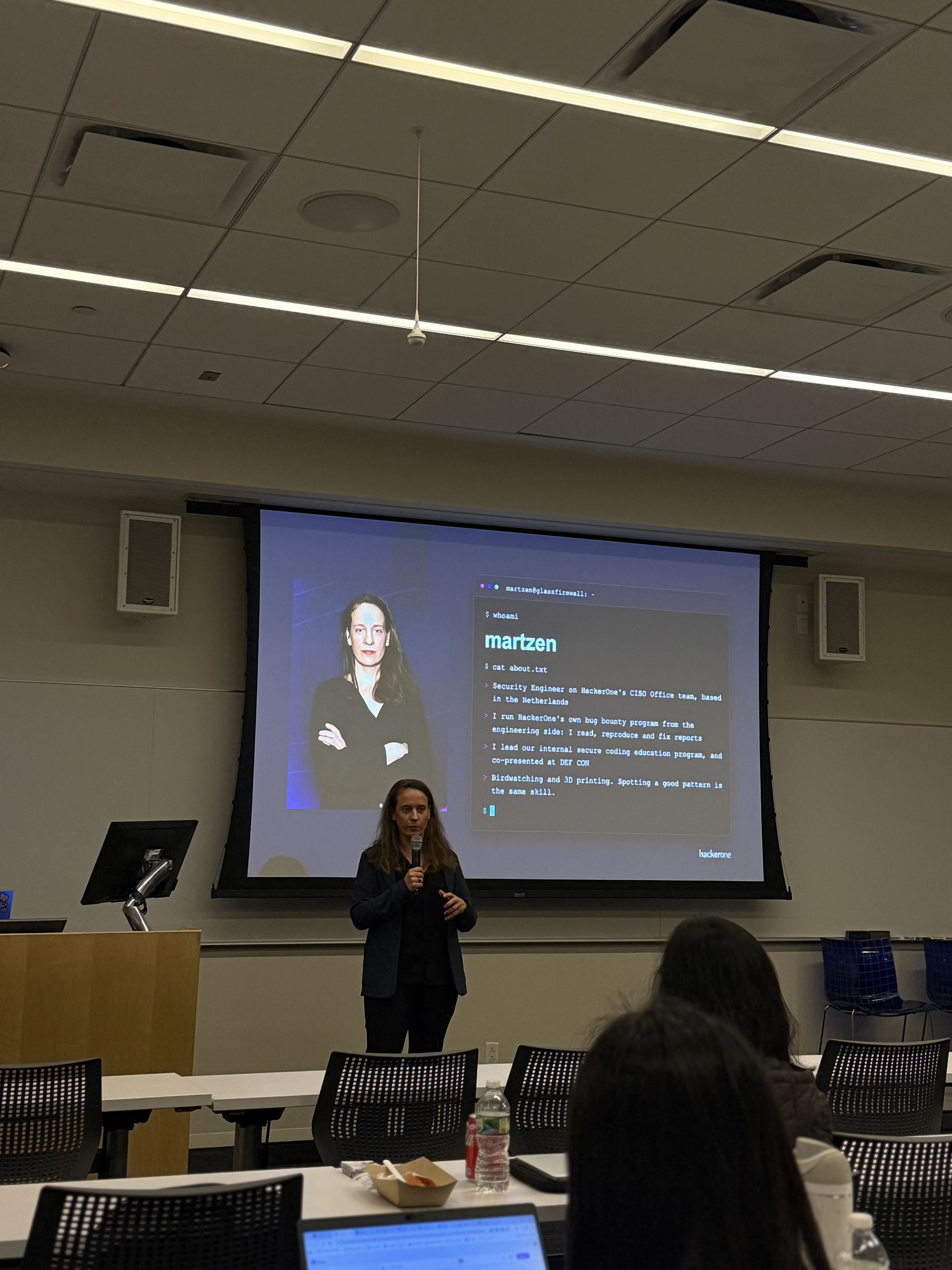
Report writing
How to document a finding clearly enough that someone else can reproduce it and fix it.
AI-assisted hacking
A practical look at where AI can speed up security work and where a human still needs to check the answer.
Hardware hacking
Two hours with physical devices, probing, modification, and plenty of hands-on troubleshooting.
Photos from 2026